
How and When to Exfoliate After Waxing: A Timeline

TL;DR: How to Do It Without Wrecking Your Skin
Wait at least 48 hours before you even think of exfoliating. Sensitive areas, like the bikini and Brazilian zone, need 72.
Scrubbing too soon risks micro-tears, redness, and open follicle irritation.
Once you're past the waiting window, exfoliating 2-3 times a week keeps skin smooth and ingrown hairs under control.
Match your exfoliation method to your body zone. Not every area needs the same approach.
Moisturizing daily is just as important to your waxing aftercare routine.
You just got waxed. Your skin feels amazing. Now don't ruin it. Knowing when to exfoliate after waxing is more important than most people think. If you go too soon, you'll irritate skin that's still recovering, but waiting too long gives ingrown hairs a chance to move in.

Thankfully, a few simple habits between now and your next appointment make all the difference. Let's break it down.
Suggested: How to Prevent Ingrown Hairs After Waxing With A Simple Routine
Why Exfoliating After Waxing Actually Matters
Post-wax exfoliation isn't just a nice-to-have step. It's actually the difference between silky skin and a bumpy, irritated mess two weeks after your appointment.
Waxing pulls hair directly out of the follicle, which is great for long-lasting smoothness, but not so good at removing the layer of dead skin cells sitting on top. As your hair starts to grow back, those cells act like a lid over each follicle. The new hair pushes upward, hits that little lid, and curls back under the skin instead of breaking through. The result is ingrown hairs, inflammation, and those tender red bumps that nobody wants.
That’s where exfoliation comes in. Removing the dead cells helps even out skin tone and unclog pores, which is why proper timing after waxing is especially important. Clearing the buildup stops the ingrown cycle before it starts, and lets your post-wax moisturizer actually absorb, and the better it does, the more you'll get out of your aftercare products.
When to Exfoliate After Waxing: The 48-Hour Rule
It all comes down to one non-negotiable number: 48 hours. That's the minimum wait time before your skin is ready to handle any exfoliation, physical or chemical.
Why? Waxing temporarily compromises your skin barrier. Follicles are open, the surface layer is thinner than usual, and your skin is feeling a bit emotional right now (even if it doesn't look it). Friction or active ingredients during that window can cause unwanted problems to join the party, like micro-tears, stinging, redness, and a real risk of bacterial irritation.
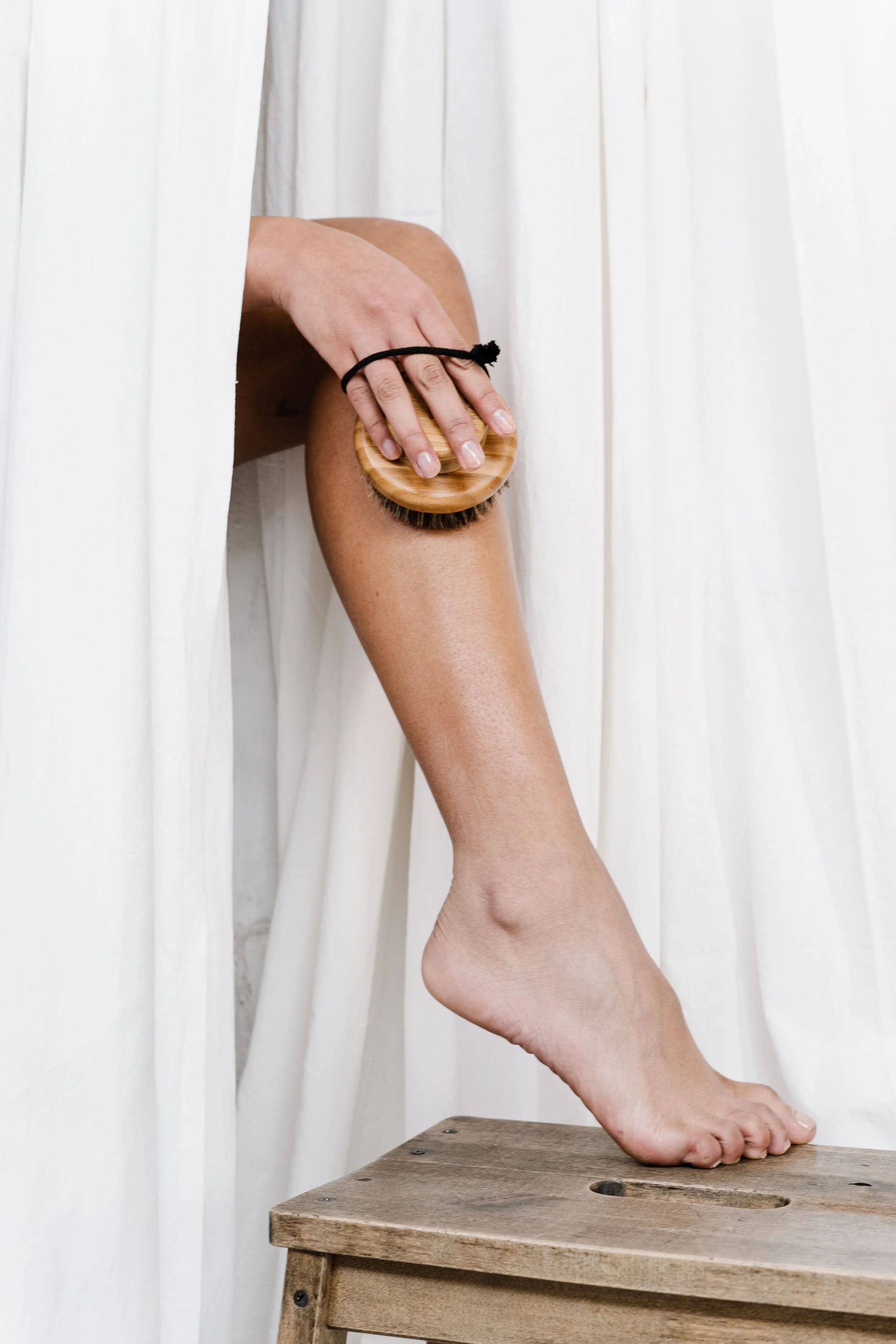
Exfoliating 2-3 times a week after waxing is an easy way to avoid ingrown hairs and bumps that come with regrowth. But the keyword there is after. That means after the initial waiting period, and not right after you leave the studio.
While the 48-hour rule is a great general guideline, the bikini and Brazilian area are a little more high-maintenance, so they need special care. They’re more sensitive than your legs or arms, and those follicles need a little more time to recover, so it’s best to give them a healthy 72 hours before you even think of exfoliating.
Your Day-by-Day Post-Wax Timeline
If your head is still swimming with numbers and deadlines to keep in mind, we made an easy-to-follow, day-by-day exfoliation breakdown you can actually use (because we love you and are all about making things easier for you). Here’s what to do after a wax:
Day 1
Step away from the scrub. Wax day means hands off, and no exfoliation, no hot showers, no saunas, no tight clothing, and a hard no on anything with fragrance, alcohol, AHAs, or BHAs. Your skin did the work. Give it a break. Lukewarm water and a fragrance-free cleanser is the move.
Days 2–3
Legs, arms, and back get the green light. A softexfoliating towel with light pressure is all you need right now, so leave the grain scrubs on the shelf for a little longer. Showers should be warm, not the kind that turns your skin red.
Days 3–4
Green light for the bikini and Brazilian zone, but barely. One pass, light pressure, exfoliating towel only. This is not the time to go rogue.
Days 5–14
Welcome to maintenance mode. Exfoliating all waxed areas regularly keeps ingrown hairs at bay and skin smooth as regrowth kicks in. Lock it in and don't skip it.
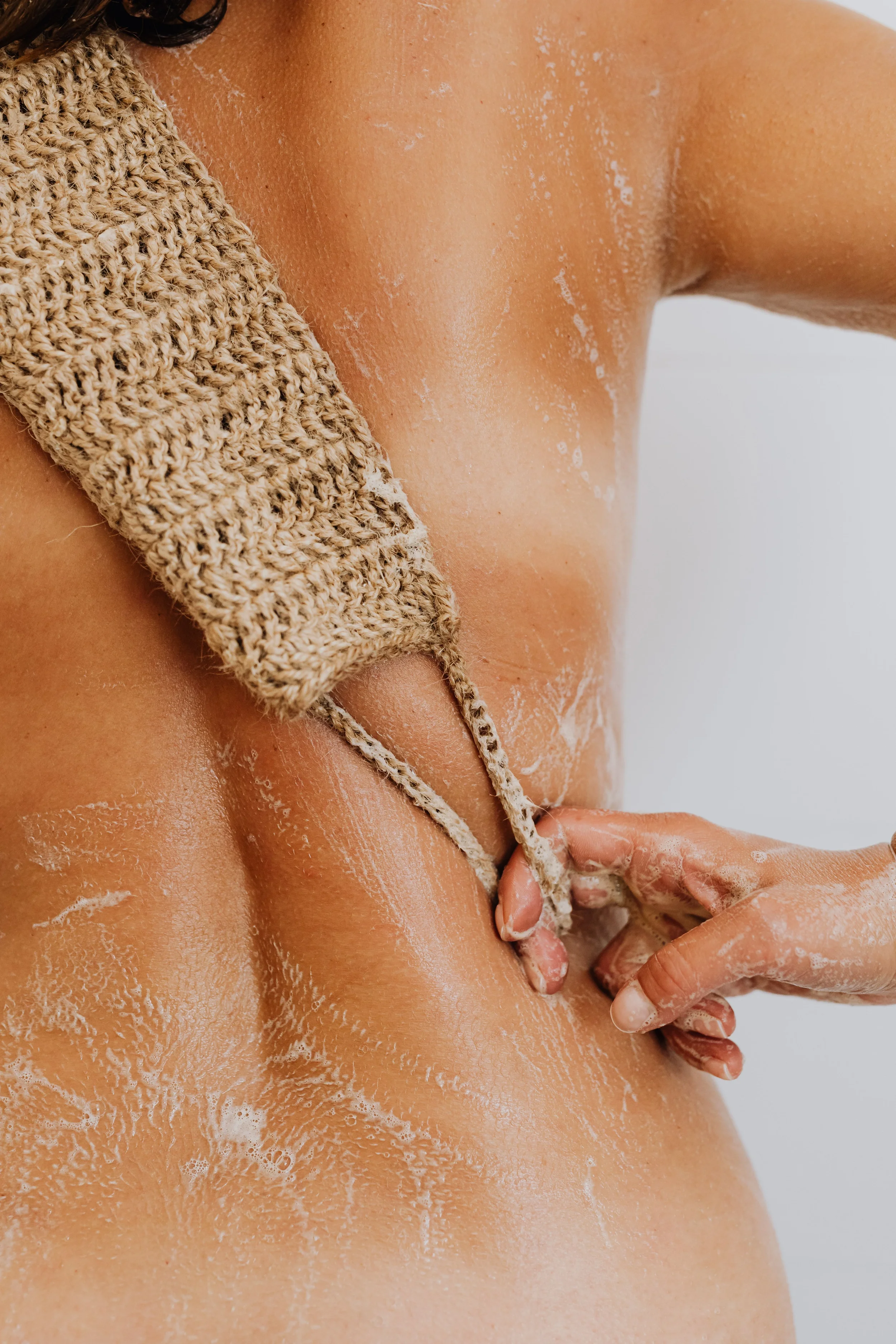
So, How Often Should You Exfoliate After Waxing?
Once you’re past the waiting period, exfoliate once a week to keep skin smooth and ingrown hairs from taking over. Not once and done. Not every day. Once a week, ongoing. Consistency is the whole game here.
That timing keeps dead skin cell buildup under control but doesn’t constantly aggravate skin that's still in recovery mode (and there’s less risk of overdoing it). If you have sensitive skin, it’s better to build up slowly than to push too hard and set your skin back, so once every other week is a good place to start.
That said, these aren’t fixed rules. Your skin doesn't behave the same way year-round, and your routine shouldn't either.
In summer, heat and humidity make skin less chill than usual. If you’re prone to irritation, start once a week and work up from there (sensitive skin types should stick to every other week through the warmer months, then reassess). Love a great Pilates class? Exfoliate after a workout, not before. Sweat sitting on freshly exfoliated skin is a fast track to breakouts.
In winter, the bigger enemy is dryness, and exfoliating parched skin too often just strips the moisture barrier further. Now’s the time to pair your scrubbing routine with a richer fragrance-free cream to keep everything hydrated and happy.
And if your skin starts staging a riot with persistent redness, a tight or shiny appearance, peeling, or that raw windburned feeling, that's your cue to pull back. Drop to once every other week, focus on barrier repair, and rebuild from there, because over-exfoliating can make things a lot worse and lead to uneven skin tone and hyperpigmentation in the long run. When in doubt, less is always more.
Physical vs. Chemical Exfoliation: Which One to Use After Waxing
Not all exfoliants are built the same, and on freshly waxed skin, you really don’t want to make the wrong choice.
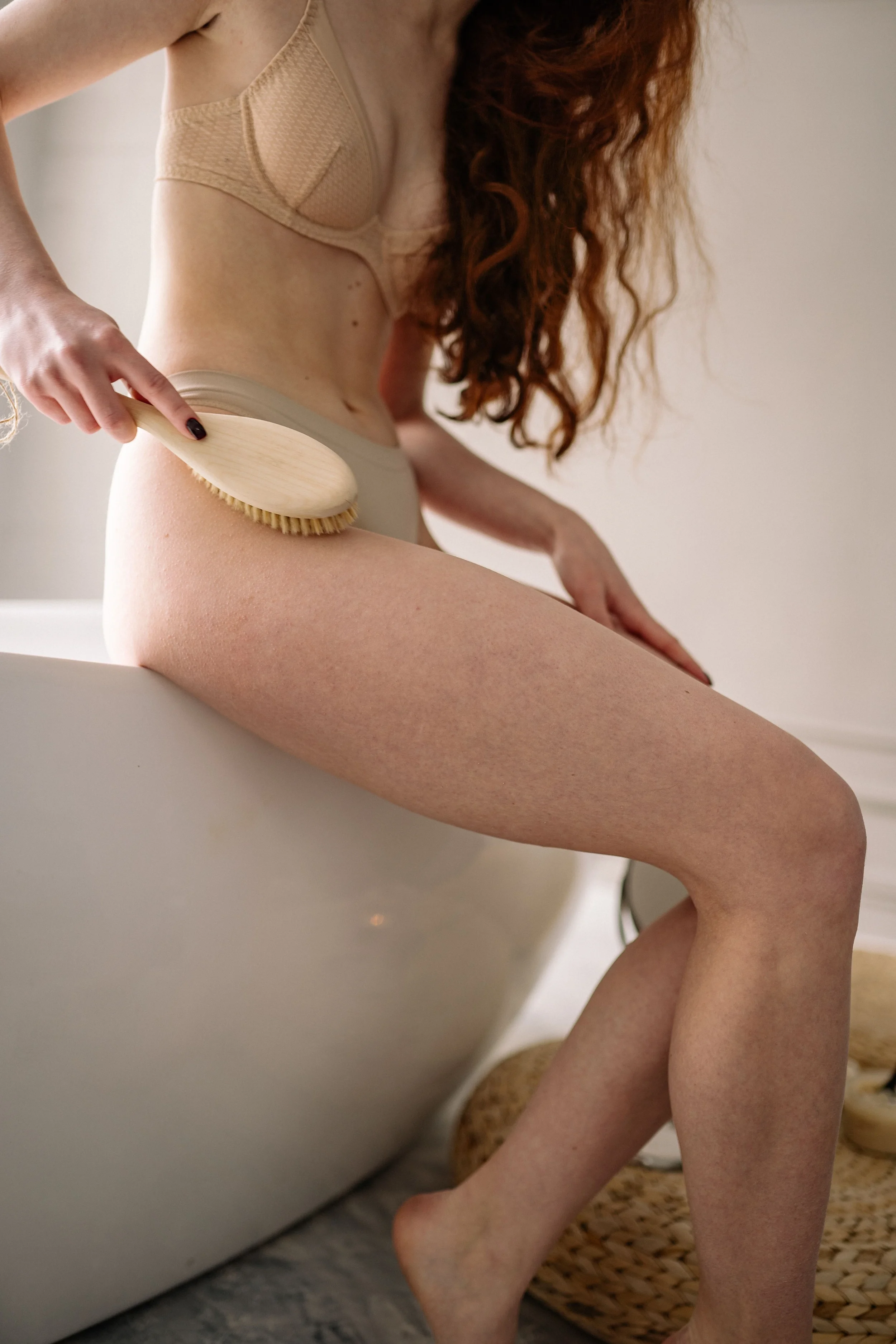
Physical exfoliation covers exfoliating towels, loofahs, dry brushes, and grain or sugar scrubs. These are all perfect for your legs, arms, and back. Unlike an exfoliating towel, which gives you control over pressure, loofahs and dry brushes can be a little too harsh, especially on skin that’s still settling.
Chemical exfoliation works differently. Instead of scrubbing away dead skin, acids actually dissolve it. There are two main categories:
AHAs (glycolic acid, lactic acid): Work on the skin's surface. Lactic acid at 5–8% is the gentler of the two and a smart starting point for post-wax exfoliation, especially on body skin.
BHAs (salicylic acid): Oil-soluble, so it goes deeper into the pore itself. At 0.5–2%, BHAs are the better fit for the bikini area and underarms, where blocked follicles and ingrown hairs are most likely to cause problems.
It doesn’t matter what type of exfoliant you use, the hard rule is the same: nothing within the first 48 hours post-wax, no exceptions. The skin barrier is too compromised to handle it. When you do introduce them, be gentle, and definitely skip any area that's still red or irritated.
Zone-by-Zone Exfoliation Guide
Every body zone has its own rules. Here's the breakdown:

Legs and Arms: The most forgiving zones. Exfoliating towels were made for these spots. Start at the 48-hour mark and settle into a regular routine.
Underarms: More sensitive than they look and quick to react. Stick to gentle physical exfoliation or a low-concentration BHA, and give it 48–72 hours before you go near them.
Brazilian and Bikini: Highest sensitivity, longest wait. Hold off for at least 72 hours, then use a gentle BHA serum or an exfoliating towel with featherlight pressure. And to be absolutely clear: never exfoliate inside the labia or deeper folds. The only spots you should scrub are the external bikini line and pubic mound (trust us, you don’t want to go down that road).
Should You Exfoliate Before Waxing, Too?
It can actually make a big difference. First, it clears the dead skin sitting over your follicles so the wax can grip your hair better, which means a cleaner pull, less breakage, and smoother results (the dream!). Second, it can release any early ingrown hairs lurking just below the surface, so you don’t have to deal with painful problems later.
Timing is key here, too. Don’t even think about doing it the morning of your appointment. Freshly exfoliated skin has been through a lot, and waxing straight on top of that means redness and reactivity, and that’s not a party we want to be invited to. Exfoliating 24–48 hours before your appointment gives your skin a few hours to settle and your pores time to calm down before hot wax touches them.
A physical exfoliant, like a towel or gentle scrub, the night before is completely fine. Your glycolic acid toner the morning of your wax is not.
Chemical exfoliants need a bigger runway. AHAs and BHAs thin the skin's surface layer over time, and going into a wax on chemically thinned skin means there’s more risk of the wax lifting or tearing the surface. If you use these regularly, pause for 3–5 days before your appointment.
Post-Wax Aftercare Beyond Exfoliation: The Full Routine
Exfoliation is one piece of the puzzle. The full aftercare picture has four phases:
1. Treat: The first 24 hours
Open follicles need chill vibes, not products that cause more drama. Reach for a soothing oil or aloe vera, and leave everything else alone. No fragrance, no alcohol, no active acids. Your follicles are tender as a newborn right now and will absorb whatever you put on them, so make sure it's something worth absorbing.
2. Moisturize: Daily, starting day one
Freshly waxed skin loses moisture faster than normal, and a dehydrated follicle is an unhappy follicle. It’s far more likely to produce ingrown hairs, which is why fragrance-free lotion or body oil applied after every shower isn't a nice extra, but an essential last step in your routine, every time, non-negotiable.
3. Exfoliate: Starting at 48 hours, once per week
Stick to the timeline, adjust for your body zone, and don't talk yourself out of the waiting period (seriously). This is what keeps skin smooth and bump-free between appointments. Skip it, and you'll feel the difference.
4. Cleanse gently: First 48 hours
Lukewarm water and a sulfate-free, fragrance-free cleanser only. Hot water reopens pores and cranks up sensitivity in skin that's already working hard to recover. Turn the temperature down.
In the first 48–72 hours, cut these out entirely: tight clothing against waxed areas, direct sun exposure, and intense workouts. Sweat in open pores triggers breakouts fast, and UV on freshly waxed skin causes hyperpigmentation a lot faster than on untreated skin. Give your skin the window it needs to rest properly, and thank us later.
FAQs: Scrub Smarter, Not Harder
Can I exfoliate waxed skin that also has a tattoo?
It depends. Healed tattoos can be exfoliated normally, but it's best to be gentle since repeated friction can gradually dull the ink vibrancy over time. Fresh or recently touched-up tattoos are a whole other story. Exfoliating over new ink, waxed or not, risks pulling up scabbing, disrupting the healing process, and causing patchy color loss. If you've recently had both a wax and a tattoo touch-up in the same area, let the tattoo heal completely before starting any exfoliation.
Is exfoliating after waxing different for darker skin tones?
Darker skin tones are more prone to post-inflammatory hyperpigmentation, the flat dark spots that can develop after skin trauma, waxing, or over-exfoliation. That means the consequences of exfoliating too soon or too aggressively are more visible and longer-lasting. Start with a soft exfoliating towel rather than a grain scrub, wait the full 72 hours rather than the minimum 48, and consider scrubbing every other week instead to give your skin the best chance of staying even-toned between appointments.
What happens if you exfoliate too soon after waxing?
Don’t worry, your skin will let you know pretty quickly (and obviously). Stinging on contact, redness that doesn't calm down, or anything that looks and feels raw are all signs you've gone in too early. If that happens, stop immediately, rinse gently with cool water, and apply a plain soothing product, like aloe vera gel. Give your skin at least another two days to chill before trying again, and keep the area moisturized in the meantime. If things don’t look better in a day or two, or if you start to see swelling or breakouts, come chat with one of our Ted D Bare pros and we’ll help you get through it.
Can I use a dry brush after waxing?
Not right away. Since it's done on dry skin with no buffer, dry brushing is significantly harsher than using a towel or scrub in the shower, and on freshly waxed skin that's still in recovery mode, that level of friction is way too much too soon. You’re trying to unclog pores, not start a fire. Wait at least a week before reintroducing dry brushing after a wax, and even then, keep pressure light and strokes short over those tender areas.
Does exfoliating after waxing help with strawberry skin?
It can. Strawberry skin is partially a texture issue and partially a pigmentation one, and regular exfoliation helps by keeping follicles clear and preventing the dead skin buildup that makes the dots more pronounced. But chemical exfoliation, particularly BHAs like salicylic acid, tends to produce better results because it works inside the follicle rather than just on the surface. For people whose strawberry skin is more about pigmentation than texture, a targeted brightening ingredient used consistently alongside your exfoliation routine will get you further.

Your Ingrown Hairs Called. They Said You Should've Exfoliated
Getting your post-wax exfoliation routine right makes a bigger difference than most people realize. But it’s actually pretty simple: Stick to the 48–72 hour waiting window, exfoliate 2-3 times a week once you're in the clear, adjust your method based on the body zone you're working with, keep your skin hydrated, and repeat. Do that consistently, and ingrown hairs, bumps, and irritation stop being part of your post-wax story. Your skin knows what it needs, and now you do, too.
Have other waxing-related questions? No matter how embarrassing you think they are (trust us, they’re not, and we’ve heard them all), our blog has answers to all of them. There’s a reason we’re the top spot for waxing in San Jose. And when you're ready for your next appointment, our Ted D Bare team is ready for you. Book an appointment to find out for yourself and enjoy the smoothest skin you’ve ever had in your life.
